
The Complete Guide to Canada's First Home Savings Account (FHSA) in 2026
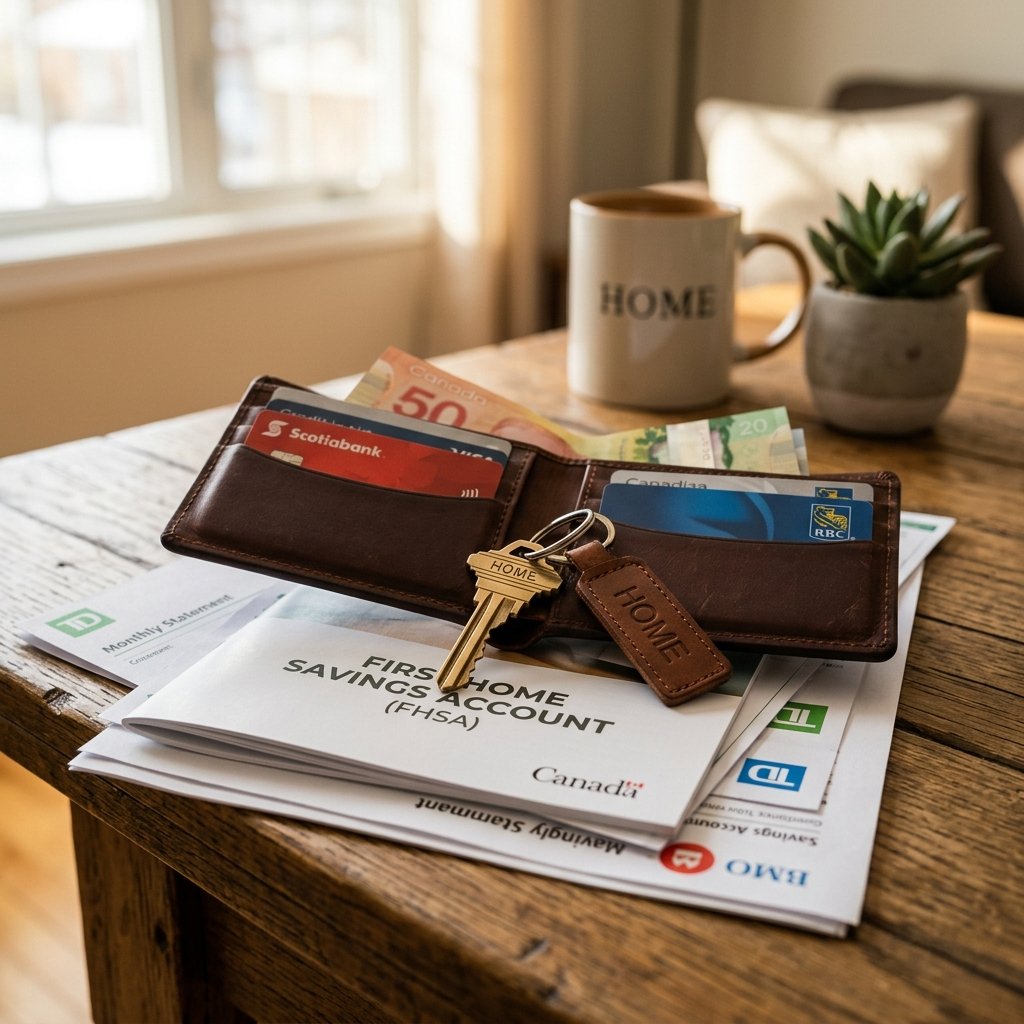
Since the First Home Savings Account launched in 2023, it's quietly become one of the most powerful wealth-building tools available to first-time home buyers in Canada. Yet many people either don't know it exists or misunderstand how it works.
This guide cuts through the confusion. Whether you're planning to buy in two years or five years, have just inherited money, or want to maximize your down payment strategy, the FHSA can play a critical role in your homeownership journey.
We'll cover everything: the updated 2026 contribution limits, who qualifies, the real impact of the triple tax advantage, how to combine the FHSA with the Home Buyers' Plan for maximum leverage, and the investment strategies that work for different timelines.
FHSA at a Glance: Key Facts You Need to Know
The Essential Numbers
- Annual contribution limit: $8,000 per calendar year
- Carry-forward limit: $8,000 maximum (not unlimited)
- Maximum contribution in one year: $16,000 ($8,000 annual + $8,000 carry-forward)
- Lifetime contribution limit: $40,000
- Contributions: Tax-deductible (like an RRSP)
- Growth: Tax-free (like a TFSA)
- Withdrawals for home purchase: Tax-free (unique to FHSA)
- Account closure deadline: December 31 of the year of the 15th anniversary of opening, or December 31 of the year you turn 71
- No earned income requirement: Unlike RRSPs, you can contribute even without employment income
- Over-contribution penalty: 1% per month on excess amounts
Who Qualifies? The Eligibility Rules
You're eligible to open and contribute to an FHSA if you meet all of these conditions:
Age and Residency
You must be at least 18 years old and a Canadian resident for tax purposes. Unlike RRSPs, which are available globally to Canadian residents, the FHSA is designed specifically for Canadians planning to buy their first home.
First-Time Home Buyer Status
This is the most important criterion. You're considered a first-time home buyer if you (and your spouse or common-law partner, if applicable) did not own a principal residence in any of the four calendar years immediately before the year you open the FHSA.
This "4-year lookback" is significantly more generous than the RRSP Home Buyers' Plan (HBP), which only looks back 2 years. This means if you sold your home more than 4 years ago and have since become a renter again, you can re-qualify as a first-time home buyer for FHSA purposes.
Sarah owned a home from 2010 to 2018 and sold it in 2018. By 2022, she no longer owned any principal residence. In 2023, she is eligible to open an FHSA because she satisfies the 4-year lookback rule (she didn't own a home in 2019, 2020, 2021, or 2022). She can now save for her next home using the FHSA, even though she was a homeowner in the past.
Contribution Limits and Carry-Forward: The Critical Rules
This section covers the most misunderstood rules about the FHSA. Many first-time savers expect catch-up contributions in the first year or unlimited carry-forward. Both assumptions are incorrect.
The Annual Contribution Limit: $8,000, Every Year
Your FHSA contribution room increases by $8,000 at the start of each calendar year, for as long as you're eligible. Unlike RRSPs (which have no annual limit) or TFSAs (which have a variable annual limit), the FHSA has a fixed $8,000 per year.
Carry-Forward: Capped at $8,000
If you don't use your full $8,000 contribution room in a given year, the unused amount carries forward to future years. However, your carry-forward is capped at $8,000.
This is crucial. Even if you skip contributing for multiple years, your total available room will never exceed $8,000 + $8,000 (that year's new room) = $16,000 maximum in a single year.
Maximum Contribution in a Single Year: $16,000
The highest amount you can contribute in any calendar year is $16,000:
- $8,000 from the current year's contribution room
- Up to $8,000 from previous years' carry-forward (capped at $8,000)
This maximum applies regardless of how many years of contribution room you've accumulated.
Lifetime Limit: $40,000
Across the entire lifetime of your FHSA, you can contribute a maximum of $40,000. This is a hard ceiling. Once you've contributed $40,000, you cannot contribute another dollar to that account.
At the current $8,000 annual limit, it takes five years to hit the lifetime cap ($8,000 × 5 = $40,000).
Year-by-Year Contribution Room: Planning Table
Here's a table showing how your contribution room accumulates over time, assuming consistent annual contributions:
| Year | Annual Room | Carry-Forward Available | Maximum Contribution | Cumulative Lifetime |
|---|---|---|---|---|
| Year 1 | $8,000 | $0 | $8,000 | $8,000 |
| Year 2 | $8,000 | $0 | $8,000 | $16,000 |
| Year 3 | $8,000 | $0 | $8,000 | $24,000 |
| Year 4 | $8,000 | $0 | $8,000 | $32,000 |
| Year 5 | $8,000 | $0 | $8,000 | $40,000 (lifetime max reached) |
Marcus opens his FHSA in 2024. That year, he contributes $5,000 (leaving $3,000 unused). In 2025, he has $8,000 of new room + $3,000 carry-forward = $11,000 available. He contributes the full $11,000. In 2026, he has $8,000 of new room but $0 carry-forward (because he used it all in 2025). Even though he skipped years, his carry-forward never exceeded $8,000 in total. This is different from RRSP rules, where carry-forward can accumulate indefinitely.
The Triple Tax Advantage Explained: FHSA vs RRSP vs TFSA
The FHSA's power comes from its unique tax treatment. To understand why it's so valuable, let's compare it with Canada's two other primary tax-advantaged savings vehicles.
| Feature | FHSA | RRSP | TFSA |
|---|---|---|---|
| Contributions | Tax-deductible | Tax-deductible | Not deductible |
| Growth | Tax-free | Tax-free | Tax-free |
| Withdrawals | Tax-free (for home purchase) | Fully taxable | Tax-free |
| Overall Outcome | Triple tax advantage | Deduction + tax-free growth, then taxable withdrawal | Tax-free growth + withdrawal, but no upfront deduction |
| Earned Income Requirement | No | Yes | No |
| Annual Limit (2026) | $8,000 | 18% of prior-year income (max $31,560) | $7,000 |
| Lifetime Limit | $40,000 | Unlimited (in aggregate) | $95,000 cumulative (as of 2026) |
| Withdrawal Flexibility | Must use for home purchase or transfer to RRSP | Fully flexible (except HBP) | Fully flexible |
Why the Triple Tax Advantage Matters: The Math
Let's model a realistic scenario. Assume you're in a 30% marginal tax bracket and plan to buy a home in 5 years.
Scenario: $40,000 Saved Over 5 Years
You contribute $8,000/year × 5 years = $40,000 total.
- Tax deduction: $40,000 × 30% = $12,000 in tax savings
- Assume 5% annual growth on average balance: ~$5,200 tax-free growth
- Withdrawal to purchase: $57,200 (entirely tax-free)
- Net benefit: You've turned $40,000 into $57,200 for your down payment, plus you got $12,000 in tax refunds along the way.
You contribute the same $40,000 to an RRSP instead.
- Tax deduction: $40,000 × 30% = $12,000 in tax savings (same as FHSA)
- Tax-free growth: ~$5,200 (same as FHSA)
- Withdrawal to purchase home: $57,200, but now you're taxed at 30% = $17,160 in taxes owed
- Net outcome: You keep only $40,040 for your down payment, and you owe taxes on withdrawal.
You contribute $40,000 to a TFSA over 5 years.
- Tax deduction: $0 (no deduction available)
- Tax-free growth: ~$5,200 (same as others)
- Withdrawal for down payment: $45,200 (tax-free)
- Net outcome: You get $45,200 without the $12,000 tax deduction benefit that FHSA provides.
Investment Strategies by Timeline: Conservative to Growth
How you invest your FHSA contributions should depend on when you plan to buy your home. The longer your timeline, the more risk you can afford to take. The shorter your timeline, the more you should prioritize capital preservation.
| Timeline to Home Purchase | Risk Profile | Recommended Investments | Expected Return | Key Consideration |
|---|---|---|---|---|
| 1–3 Years | Conservative | HISA, GICs, Money Market Funds, Short-term Bonds | 4–5% | Capital preservation is priority. Volatility risk is unacceptable. |
| 3–5 Years | Balanced | Balanced ETFs (60% equity / 40% fixed income), Bond ETFs, Dividend ETFs | 5–7% | Moderate growth with some downside protection. Can weather short-term volatility. |
| 5+ Years | Growth | Equity ETFs, All-equity portfolios, Growth-oriented funds, Small-cap, Dividend Growth | 7–9% | Time horizon allows recovery from market downturns. Maximize growth potential. |
Conservative Strategy (1–3 Years)
If you're buying within three years, you cannot afford a market downturn. A 20% stock market correction near your purchase date could devastate your down payment savings.
Recommended allocation:
- High-Interest Savings Account (HISA): 50% — Immediate liquidity, 4.5–5% current rates
- GIC Ladder: 40% — Lock in rates for 1, 2, and 3 years; redeem as you approach purchase date
- Money Market Fund: 10% — Flexibility for market opportunities
This strategy sacrifices growth for certainty. Your purchasing power is protected.
Balanced Strategy (3–5 Years)
With 3 to 5 years, you can absorb a market downturn and recover. This is the sweet spot for most first-time buyers.
Recommended allocation:
- Balanced ETF (60/40 or 70/30): 70% — Examples: XGRO (iShares Global Growth), VGRO (Vanguard Growth)
- Bond ETF or GIC: 30% — Stability and downside dampening
A balanced approach captures most of the upside of equities while reducing volatility. Historical data shows this mix has recovered from bear markets within 2–3 years.
Growth Strategy (5+ Years)
If you have five or more years, time is your ally. Market crashes are gifts—they let you buy more assets at lower prices.
Recommended allocation:
- All-Equity ETF: 80–100% — Examples: VGRO (growth version), VFV (U.S. equity), VCN (Canadian equity)
- HISA/Emergency Reserve: 0–20% — For dollar-cost averaging or capturing opportunities
Historically, a 100% equity portfolio has never had a negative return over a 10-year period in Canada. With a 5+ year horizon, this is appropriate.
Combining FHSA with the Home Buyers' Plan (HBP): The Power Move
The real lever for couples and higher-income earners is combining the FHSA with the Home Buyers' Plan (HBP)—the RRSP withdrawal strategy for first-time buyers. Together, they create a formidable down payment accelerator.
What Is the Home Buyers' Plan?
The HBP lets you withdraw up to $60,000 from your RRSP tax-free to purchase your first home. You have 15 years to repay it to your RRSP, and repayment is mandatory (unlike a withdrawal, which would be taxed).
The Combined Strategy: FHSA + HBP for Couples
Here's where it gets powerful. A couple can each use both accounts:
| Account | Per Person | For a Couple |
|---|---|---|
| FHSA (lifetime limit) | $40,000 | $80,000 |
| HBP (one-time withdrawal) | $60,000 | $120,000 |
| Total Tax-Advantaged Down Payment | $100,000 | $200,000 |
The couple: Both 32 years old, first-time buyers, household income $180,000/year. They've each accumulated $40,000 in RRSPs and plan to open FHSAs now.
Down payment sources:
- Alex's FHSA: $40,000
- Sam's FHSA: $40,000
- Alex's HBP: $60,000
- Sam's HBP: $60,000
- Total: $200,000
On a $600,000 home purchase, a $200,000 down payment is 33%, which means:
- Mortgage needed: $400,000 (vs. $480,000+ if down payment was smaller)
- Mortgage insurance: Minimal or eliminated
- Monthly payment savings: ~$500/month or more
The tax advantage? Alex and Sam received $40,000 in FHSA deductions (assuming 40% marginal tax rate = $16,000 in refunds) plus the benefit of withdrawing from RRSPs tax-free via the HBP. This couple saved approximately $20,000+ in taxes while building a massive down payment.
What Happens If You Don't Buy a Home?
Life happens. Maybe the real estate market becomes unaffordable, or your priorities shift, or you decide renting makes more sense. If you don't use your FHSA for a home purchase, you have two options, and one of them is a game-changer.
Option 1: Transfer to Your RRSP (The Best Option)
This is the safety net that makes the FHSA so valuable. If you never buy a home, you can transfer your entire FHSA balance—including all the tax-free growth—into your RRSP. This does not affect your RRSP contribution room.
Here's why this matters: You already got a tax deduction when you contributed to the FHSA. Now you're moving pre-tax dollars into your RRSP, which continues to grow tax-free. You've essentially converted your FHSA (with its $40,000 lifetime limit) into additional RRSP space.
You contribute $40,000 to your FHSA over 5 years and get a $12,000 tax deduction (at 30% tax rate). The funds grow to $50,000. Life changes, and you realize you won't buy a home in the foreseeable future. You transfer the full $50,000 to your RRSP. Your RRSP balance grows tax-free. No tax bill. No penalty. The money is now in your retirement account, still working for you.
Option 2: Close the Account and Withdraw (Taxable)
If you don't transfer to an RRSP, you can simply close the account and withdraw the funds. However, this triggers a taxable event. Any amount you withdraw is added to your income and taxed at your marginal rate.
This is the expensive option. If your FHSA has $50,000 and you're in a 30% tax bracket, you'll owe $15,000 in taxes. You'll net only $35,000.
Common FHSA Mistakes: Don't Leave Money on the Table
As the FHSA matures, patterns emerge. Here are the most frequent errors that cost people thousands.
Mistake 1: Assuming First-Year Catch-Up (Does Not Exist)
Many people open an FHSA expecting a large first-year contribution room, similar to TFSAs in 2009 or other programs with grandfathering rules. This does not exist.
Year one = $8,000. Year two = $8,000. There's no catch-up, no backdating, and no lump-sum opening bonus. Plan accordingly.
Mistake 2: Thinking Carry-Forward Is Unlimited
If you skip contributing for three years, you might think you have $24,000 in room. You don't. Your carry-forward maxes out at $8,000. If you haven't contributed, your available room is $8,000 (that year's new room) + $8,000 (maximum carry-forward) = $16,000 maximum.
Unused carry-forward beyond $8,000 is lost forever. If you have accumulated room, use it or lose it.
Mistake 3: Waiting Too Long to Open
Every year you delay is a lost year of contributions and growth. Open your FHSA as soon as you qualify, even if you only contribute a small amount that year. Early opening means earlier compounding.
You open your FHSA at age 25 vs. age 28. That three-year difference costs you:
- Lost contributions: $24,000 ($8,000 × 3 years)
- Lost growth on those contributions (at 6% annual return): ~$2,600
- Lost tax deductions: ~$7,200 in tax savings (at 30% rate)
- Total opportunity cost: ~$33,800
And you've reduced your lifetime contribution capacity if you have a short timeline to homeownership.
Mistake 4: Keeping All Money in Cash
Some people open an FHSA but keep the funds in a savings account earning 1–2%, missing out on 5–7% returns from balanced portfolios or GICs. The FHSA's tax advantage only amplifies the importance of proper investing.
Match your investments to your timeline (as outlined earlier in this guide), but do invest. Cash drag is invisible but expensive.
Mistake 5: Confusing FHSA Rules with RRSP Rules
The FHSA is new, and it's easy to mentally map it back to RRSPs or TFSAs. But the rules are different:
- No earned income requirement: Unlike RRSPs, you can contribute to an FHSA without employment income
- No first-60-days provision: Unlike RRSPs, you cannot carry back contributions to the prior tax year. Contributions must be claimed in the year made
- Different carry-forward rules: Unlike RRSPs (unlimited carry-forward), FHSA carry-forward is capped at $8,000
- Different first-time buyer lookback: FHSA looks back 4 years; HBP looks back only 2 years
These differences are important. Don't assume FHSA rules match RRSP rules.
Year-by-Year FHSA Planning Timeline: From Opening to Purchase
Here's a practical timeline for someone planning to buy within 5 years.
Action: Open FHSA immediately. Contribute $8,000 (or more if you have carry-forward). Set up automatic monthly contributions if possible.
Investment: If buying in 4 years, consider 70% balanced ETF / 30% bonds.
Tax: Claim the deduction on your tax return. You should receive a tax refund of $2,400–$4,000 (depending on tax bracket).
Action: Contribute another $8,000. Consider using your prior year's tax refund to boost contributions.
Investment: Rebalance if needed. Maintain your asset allocation strategy.
Monitoring: Track your balance. You should be approaching $20,000 in total contributions + growth.
Action: Contribute another $8,000. Total contributions now $24,000+.
Investment: If buying in 2 years, shift to a more conservative allocation: 50% balanced ETF / 50% bonds and GIC.
Planning: Start researching mortgage pre-qualification. Your down payment target should be clear.
Action: Contribute another $8,000. Total contributions $32,000+.
Investment: Move to conservative allocation: 20% equity / 80% fixed income and GICs. Lock in rates if GIC ladder is your strategy.
Planning: Get mortgage pre-approval. Know your maximum purchase price.
Action: Make final contribution ($8,000). Your FHSA should now hold $40,000+ (contributions + growth).
Investment: Shift remaining funds to HISA or money market. No equity exposure.
Withdrawal: When you're ready to buy (before closing), withdraw your FHSA balance tax-free and use it toward your down payment.
The Bottom Line: The FHSA Changes the Game
The First Home Savings Account is the single most powerful tool available to Canadian first-time buyers. The triple tax advantage—deductible contributions, tax-free growth, and tax-free withdrawals for a home purchase—is unmatched by any other account.
For couples, combining the FHSA with the Home Buyers' Plan can create down payment firepower of $200,000 or more. For individuals, it's a $40,000 boost to homeownership that includes immediate tax savings via deductions.
The rules are simpler than RRSPs and more predictable than TFSAs, but they require discipline: contribute consistently, invest according to your timeline, and don't fall for common mistakes like assuming first-year catch-up or unlimited carry-forward.
If you're planning to buy your first home in Canada, ignoring the FHSA is a missed opportunity. The account exists specifically for you. Use it.
Take Control of Your Down Payment
The FHSA can be the difference between saving for 10 years and becoming a homeowner in 5. But only if you use it strategically.
Download our exclusive FHSA Contribution & Investment Playbook for a complete 5-year plan, customized contribution schedules, and a downloadable spreadsheet to track your progress toward homeownership.
Get the Playbook (Free PDF)
Andrew Carrothers
Strategy Lead & Founder
Andrew is a financial strategist dedicated to helping Canadians optimize every dollar. With over 15 years of experience in personal finance and portfolio optimization, he focuses on tactical wealth building.
Master Your Financial Optimization
Join 5,000+ Canadians receiving our weekly "Optimization Tactics" directly to their inbox. Get our free 5-day starter guide instantly.
No generic tips. No spam. Only optimization tactics.