
Advanced Canadian Real Estate Strategies
Residential and investment property optimization, mortgage strategies, and homeownership tactics. Browse our latest articles focusing on extracting the absolute maximum value from this aspect of your finances.

The First-Time Home Buyers' GST/HST Rebate (Up to $50,000) and Ontario's Extra Rebate
The federal first-time buyers’ GST/HST rebate can return up to $50,000 on a new home. Ontario’s enhanced rebate is a separate, dated top-up.

Cash Damming in Canada: Steps, Tracing, and the Smith Manoeuvre Difference
Cash damming sends rental or business cash to the home mortgage and borrows for the expenses. CRA has not approved the nickname.

CMHC Mortgage Insurance: Premiums, the 30-Year Amortization Rule, and When It's Worth It
CMHC's homeowner premium runs from 0.60% to 4.00% of the loan by loan-to-value. A 30-year amortization adds 0.20 of a point. The premium protects the lender.

Rent vs Buy in Canada: The Decision Guide Behind the Calculator
Rent versus buy is an ending-wealth test. The calculator runs the dollars. This page is the list of assumptions that flip the sign, and the costs the tool leaves out.

Rental Property Tax Deductions in Canada: Expenses, CCA, and Recapture
Current rental expenses are deductible. A building is capital cost allowance, usually Class 1 at 4%, and CCA cannot create or increase a rental loss. Selling can recapture it.

The Canadian Mortgage Guide: Rates, Terms, Renewal, and Prepayment
Four mortgage numbers: the contract rate, qualification at contract plus 2% or 5.25%, the penalty if you leave, and a 65% revolving cap.

Mortgage Renewal in 2026: Straight Switches, the Stress Test, and Negotiating Your Rate
Canada 2026: renewing with your lender skips the stress test, and so does a straight switch. Borrow more or stretch the amortization and the test applies.

Fixed vs Variable Mortgage in 2026: A Decision Framework
In Canada in 2026, choose a fixed mortgage if the payment must stay put, or a variable mortgage if you can absorb a prime move and may break the term.

The Mortgage Stress Test Explained (Minimum Qualifying Rate)
As of September 2026, you qualify at the greater of your contract rate plus 2 percentage points or 5.25%. The floor matters only under 3.25%.

Mortgage Prepayment Penalties: IRD vs Three Months' Interest
FCAC's own example, on a $200,000 balance at 6% with 36 months left, is a $3,000 three-month charge and a $12,000 interest-rate differential. The penalty is the higher figure. Your discount can make it larger.

First-Time Home Buyer Guide Canada (2026): FHSA, HBP, Rebates, and Order of Operations
In 2026 the first-home stack is an FHSA at $8,000 a year and $40,000 lifetime, an HBP withdrawal up to $60,000, a $10,000 home buyers' amount worth $1,400 at the 14% federal rate, and CMHC insurance under a $1.5 million cap.

The Home Buyers' Plan (HBP): Withdrawal Limit, Repayment, and FHSA Stacking
The Home Buyers' Plan limit is $60,000 per person. CRA says a first withdrawal in 2026 starts the 15-year repayment in 2031, so a full withdrawal is $4,000 a year. You can also withdraw from an FHSA for the same home.

Readvanceable Mortgages in Canada: How They Work and Which Lenders Offer Them
A readvanceable mortgage lets a revolving limit rise as you pay principal. OSFI caps that revolving slice at 65% of value. Anything between 65% and 80% has to amortize and must not readvance. Confirm the contract before you rely on a brand name.

Rent vs Buy in Canada: Calculator and the Assumptions That Decide It
Compare ending wealth for renting and buying on assumptions you type: down payment, Canadian mortgage rate, appreciation, maintenance, property tax, closing costs, and the return on money not used to buy.

Mortgage Prepayment Calculator (Canada): What Extra Payments Save in 2026
Canadian mortgage prepayment calculator: see the interest and years that extra payments and lump sums save, plus the big banks’ 10% to 20% privilege limits.

Landlord Incorporation: When It Pays, and When It Is Just a T2
Most small landlords should own rentals personally. A corporation helps when the activity is actually a business, the liability is real, or you are deferring retained earnings on purpose.

Mortgage Prepayment vs TFSA and RRSP: Which Dollar First
Put the extra dollar in order: costly consumer debt, the employer match, then an RRSP, a TFSA, or a mortgage prepayment.

FHSA to Home Purchase: The Sequencing, Not the Tax Brochure
First-home order of operations: when to open an FHSA, when to contribute, when to withdraw, and where the Home Buyers' Plan fits.

REITs vs Direct Rental Ownership in Canada
A REIT is a security you can hold in a TFSA. A rental is a building, a tenant, and a loan. They are not two tickers for the same bet.
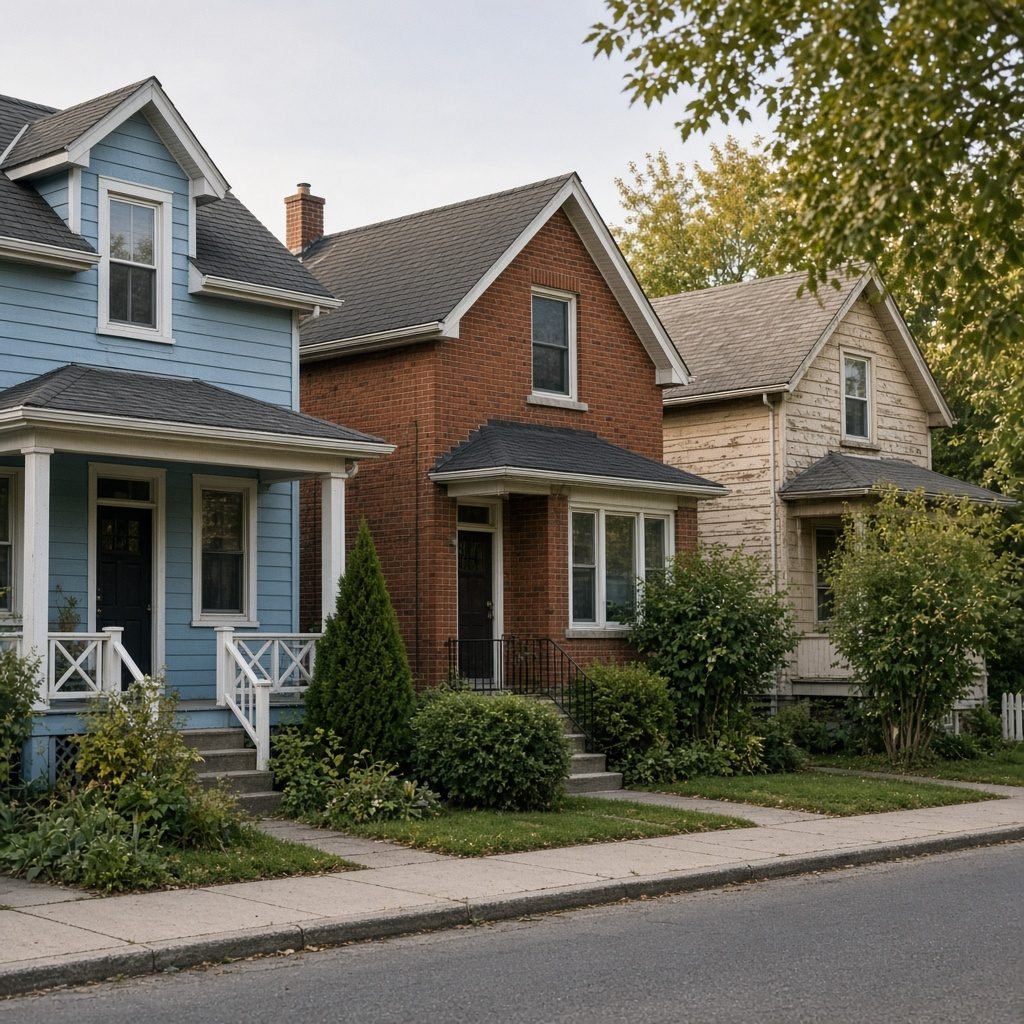
Multi-Property Real Estate Math, and Where It Breaks
NOI, cap rate, cash-on-cash, and debt service on a second and third door — and the vacancy, renewal, and repair year that makes the spreadsheet a salary problem.

Principal Residence vs Rental Property: The Tax Tradeoff
The principal residence exemption is a tax rate of zero on a gain. A rental is income, a taxable disposition, and a pile of elections if you change your mind.

Land Transfer Tax and Closing Costs Across Canada
A province-by-province map of land transfer tax, the municipal add-ons, and the other cheques due on closing day that are not the down payment.

HELOC Strategies That Stay CRA-Clean
Interest is deductible when borrowed money earns income. How to trace a HELOC, run a cash dam, and avoid the mixes that sink the deduction.

Mortgage Prepayment vs Investing Extra Cash in Canada
The mortgage rate is a risk-free after-tax return. Any investment you choose instead has to clear that hurdle after tax and after risk.

The Smith Manoeuvre in Canada: Steps, Deductibility, and the Risks
How a readvanceable mortgage turns principal into an investment loan, when the interest is actually deductible, and the leverage risks the brochure skips.