
Tax Record-Keeping Guide for Canadians | CRA Requirements
Did you know? 47% of Canadian taxpayers make mistakes on their tax returns due to missing or disorganized records. The CRA receives over 2 million tax adjustments annually because individuals cannot properly document their deductions. This guide ensures you'll never be caught without the evidence you need.
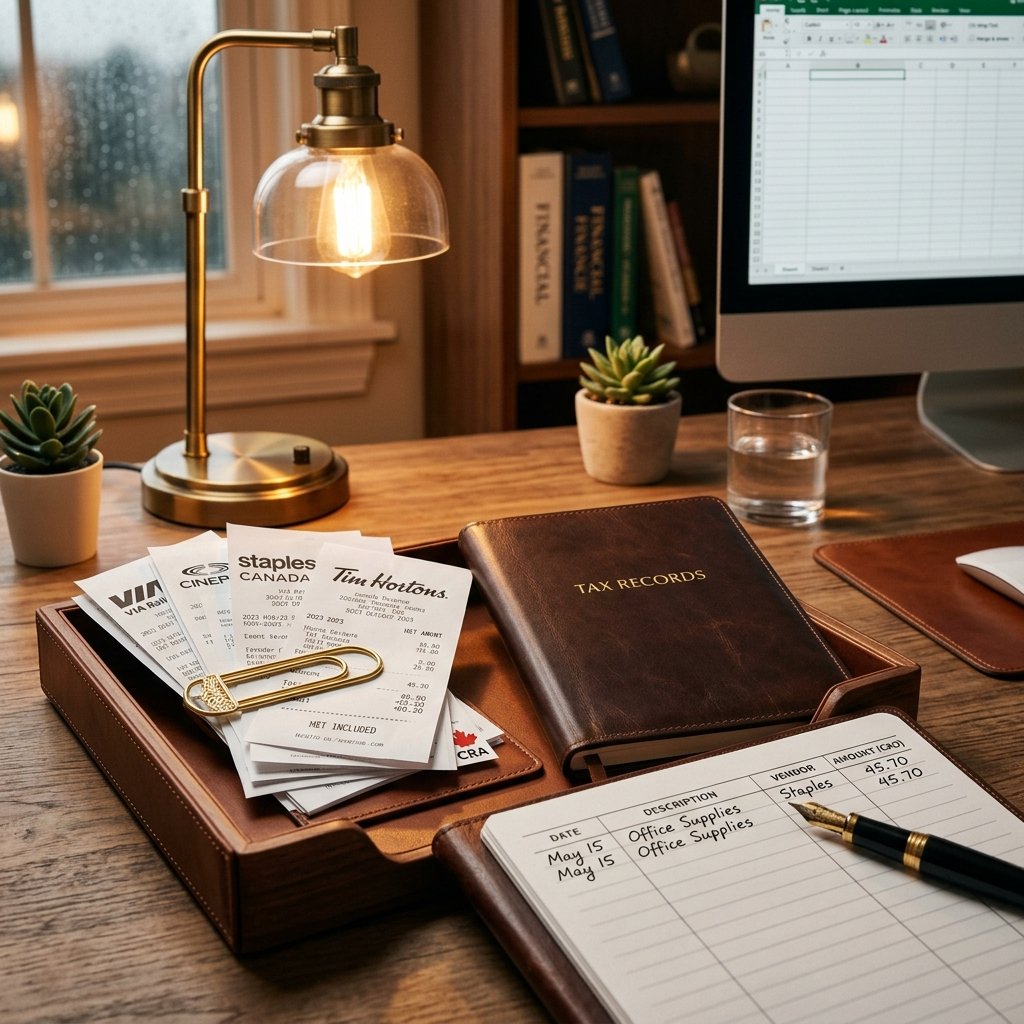
Introduction: Why Tax Records Matter More Than You Think
Tax season arrives every year like clockwork, and with it comes a common question: "Do I really need to keep all these receipts and statements?" The answer is an emphatic yes—but not for the reasons you might think.
The Canada Revenue Agency (CRA) doesn't just recommend keeping tax records; they require it. Proper record-keeping is your first line of defense against audit adjustments, denied deductions, and penalties that can cost thousands of dollars. More importantly, it's your proof of innocence should the CRA ever question your tax return.
In 2026, with digital documentation becoming standard and CRA enforcement increasing, having an organized record-keeping system isn't optional—it's essential. This guide walks you through exactly what to keep, how long to keep it, and how to organize it efficiently.
The CRA's 6-Year Rule: Understanding the Foundation
The cornerstone of Canadian tax record-keeping is straightforward: keep your tax records for at least 6 years from the end of the tax year they relate to.
Here's what this means in practical terms:
- Documents from your 2024 tax year must be kept until the end of 2030
- If you filed a return late, the 6-year period starts from the date you filed, not the original deadline
- This applies to individuals, businesses, self-employed contractors, corporations, trusts, and charities
- The CRA can ask you to keep records longer than 6 years for specific situations
Capital property records—such as purchase agreements for investment properties, share registries, and business acquisition documents—should be kept indefinitely or until the property is sold and the transaction is fully concluded with the CRA. These documents affect your cost basis calculation and capital gains, making them permanent records in your tax file.
Why Six Years?
The CRA uses a 6-year window because Canada's statute of limitations for tax assessments typically expires after 6 years from the initial assessment (with exceptions for fraud or misrepresentation). By keeping records for this period, you have everything needed to respond to any CRA inquiry or reassessment notice.
What to Keep: Your Essential Tax Records Checklist
Not all documents are created equal when it comes to tax records. Here's what the CRA specifically wants you to retain:
Income Documentation
- T-slips: T4, T4A, T4E, T4RIF, T5, T5007 (all income-reporting slips from employers, banks, investment firms, and government programs)
- Invoices and receipts: For self-employed income, freelance work, or side businesses
- Bank statements: Proof of deposits and business income
- Sales records: Invoices, receipts, and contracts for goods or services sold
- Business activity records: Client lists, contracts, and transaction documentation
Deduction and Expense Documentation
- Receipts and invoices: Every expense you claim must be supported by original receipts showing date, amount, and what was purchased
- Home office records: Utility bills, rent/mortgage statements, and square footage calculations
- Vehicle expense logs: Mileage records, fuel receipts, maintenance invoices, and insurance bills
- Charitable donation receipts: Official donation receipts from registered charities
- Medical and dental receipts: Prescriptions, treatment receipts, and professional invoices
- Education receipts: Tuition statements and course materials (for eligible programs)
- Childcare receipts: Documentation from licensed care providers
Investment and Property Records
- T-slips: T5 (investment income), T5008 (disposition of securities), T3 (trust distributions)
- Investment statements: Annual or quarterly statements showing purchases, sales, and distributions
- Brokerage confirmations: Buy and sell confirmations with prices and dates
- Property purchase documents: Closing statements, mortgages, and title documents
- Property improvement receipts: Renovations, repairs, and capital improvements
- Rental property records: Income statements, expense receipts, mortgage statements
| Document Type | Keep For | Why |
|---|---|---|
| T-slips (T4, T5, etc.) | 6 years from end of tax year | Prove reported income |
| Expense receipts | 6 years from end of tax year | Substantiate claimed deductions |
| Property documents | Indefinitely | Calculate capital gains on sale |
| Donation receipts | 6 years from end of tax year | Support charitable donation claims |
| Business records | 6 years after business ends | Respond to CRA inquiries |
| Mortgage/loan statements | Duration of loan + 6 years | Verify interest deductions |
Other Important Records to Maintain
- Bank and credit card statements
- Loan agreements and mortgage documents
- Insurance policies and premium receipts
- Cancelled cheques
- Payroll records and T4 summaries
- RRSP contribution receipts
- TFSA transaction statements
- Employment expense logs
Digital vs. Paper: What the CRA Accepts in 2026
The CRA has fully embraced digital record-keeping. In fact, for 2026, the CRA is discontinuing automatic mailing of paper tax return packages, signaling a clear shift toward digital submissions and digital records.
Digital Records: The CRA's Preference
The CRA accepts electronic records—including scanned documents, PDFs, digital images, and software-generated files. However, there are specific requirements:
- Accuracy: The scanned image must be an accurate reproduction of the original document
- Readability: Text and details must be clear and legible; cannot be obscured by poor resolution or fading
- Completeness: The image must contain all the important information from the original
- Format: PDF is the most commonly accepted digital format; other formats may require conversion
- Backup: You must have a reliable backup system to prevent loss of digital files
Use at least 200 DPI (dots per inch) resolution when scanning documents. For color originals, use color scanning. Store files in PDF format, organize by year and category, and maintain at least two backup copies—one locally and one cloud-based.
Paper Records: Still Acceptable
The CRA continues to accept paper records, though they're becoming less common. If you maintain physical documents:
- Keep them in a safe location (fireproof safe, secure storage)
- Organize by year and category for quick retrieval
- Consider photographing or scanning them for backup
- Ensure they remain legible throughout the 6-year period
Hybrid Approach: Best of Both Worlds
Many Canadian taxpayers use a hybrid approach: scan key documents digitally for easy access and backup, while keeping originals of critical documents (property deeds, investment statements, donation receipts) in physical storage for 6 years. This provides both convenience and security.
Building Your Record-Keeping System: Monthly, Quarterly, and Annual Routines
Good record-keeping isn't about one massive cleanup before tax season—it's about consistent, manageable routines throughout the year.
Monthly Routine (30 minutes)
- File receipts: Sort receipts and invoices by category (expenses, income, deductions)
- Update spreadsheet: If tracking expenses manually, add transactions to your tracking sheet
- Review statements: Check bank and credit card statements for accuracy
- Scan documents: Scan receipts over $50 and store digitally
Quarterly Routine (1 hour)
- Reconcile accounts: Match receipts to bank transactions
- Verify deductions: Ensure claimed deductions are properly documented
- Backup digital files: Upload scanned documents to cloud storage
- Review tax deadlines: Check for upcoming quarterly tax payments or filings
Annual Routine (2-3 hours)
- Complete financial summary: Compile total income, deductions, and expenses for the year
- Gather T-slips: Collect all T4s, T5s, and other income documents (usually received by February)
- Organize files: Create a folder for the completed tax year with all supporting documents
- Archive oldest records: Move documents from 6+ years ago to long-term storage
- Prepare for tax filing: Have all information ready for your accountant or tax software
Create a simple folder structure: Year → Month → Category (Income, Deductions, Medical, Charity, etc.). For digital files, use the same structure. This makes retrieval fast and ensures nothing gets lost. Consider using accounting software like QuickBooks, FreshBooks, or Wave to automate much of this process.
The Cost of Poor Record-Keeping: What Happens When You Fall Short
The consequences of inadequate record-keeping are real and costly. Here's what the CRA can do:
Denied Deductions
Without supporting documentation, the CRA will simply deny your claimed deductions. If you claim $5,000 in business expenses but can only document $3,000, you lose $2,000 in tax relief. For a taxpayer in the 45% marginal tax bracket, that's $900 in lost tax savings.
Audit Penalties and Interest
If the CRA finds that you've claimed deductions without proper documentation, they can apply:
- Reassessment: Recalculating your tax based on documented expenses only
- Interest charges: Currently around 8% per year on unpaid taxes, compounded daily
- Gross negligence penalties: Up to 50% of the tax owed if the CRA believes you were careless
- Fraud penalties: Up to 200% of taxes owing if intentional misrepresentation is found
Real-World Example
Sarah, a freelance consultant, claimed $15,000 in home office expenses but kept no documentation beyond a rough estimate. During an audit, the CRA allowed only $6,000 in documented expenses. Sarah owed:
- Additional tax on $9,000 unreported income: $4,050 (at 45% rate)
- Interest on unpaid amount (3 years): $972
- Gross negligence penalty (50%): $2,025
- Total cost: $7,047
Proper record-keeping from the start would have cost her maybe $2 in file storage supplies.
Time and Stress
Beyond financial penalties, a CRA audit without proper records is incredibly time-consuming and stressful. You'll need to:
- Reconstruct missing documentation
- Provide explanations to the CRA
- Potentially hire an accountant to help respond (additional $1,000-3,000 cost)
- Spend weeks or months in the audit process
Special Situations: When 6 Years Isn't Enough
While 6 years is the standard rule, several situations require longer retention:
Ongoing Business Operations
If your business is still operating, keep all business records even if the tax year is beyond 6 years old. Once the business is wound up or sold, you must keep records for 6 years after the business ends.
Property and Capital Assets
Keep property purchase documents, renovation receipts, and improvement records for as long as you own the property, plus 6 years after you sell it (to support capital gains calculations if reassessed).
CRA Requests for Extended Records
If the CRA issues a notice requiring you to keep records longer than 6 years, comply immediately. They'll specify what records and how long to keep them.
Objections and Appeals
If you've filed an objection or appeal of a CRA assessment, keep all related records until the matter is fully resolved, which can take years.
Action Steps: Start Your System Today
Don't wait for tax season or a CRA letter to get organized. Start this week:
- Week 1: Gather all loose receipts from the past 3 months and organize them by category
- Week 2: Scan or photograph receipts; back them up to cloud storage (Google Drive, OneDrive, Dropbox)
- Week 3: Set up a simple filing system—either physical or digital—using the structure recommended above
- Week 4: Schedule 30 minutes each month on your calendar for filing and organizing
Conclusion: Records Are Insurance
Think of tax records as insurance against financial loss. For the modest effort of staying organized throughout the year, you protect yourself from thousands of dollars in potential penalties and interest. The CRA's 6-year rule isn't arbitrary—it's your protection window.
By keeping clear, complete, and well-organized records, you ensure that:
- Your tax returns are accurate and defensible
- You can claim every legitimate deduction
- You're prepared if the CRA ever questions your return
- You minimize stress during tax season
- You have proof of your financial history
Start small, stay consistent, and your record-keeping system will practically run itself.
Related Articles:
- Article 19: Surviving a CRA Audit—What to Expect and How to Respond
- Article 21: The Complete 2026 Canadian Tax Calendar—Deadlines You Cannot Miss
Ready to master your entire tax strategy?
Chapter 20 of our complete tax guide covers the full record-keeping system with monthly checklists, digital organization templates, and CRA correspondence templates.
Explore Our Tax Guides
Andrew Carrothers
Strategy Lead & Founder
Andrew is a financial strategist dedicated to helping Canadians optimize every dollar. With over 15 years of experience in personal finance and portfolio optimization, he focuses on tactical wealth building.
Master Your Financial Optimization
Join 5,000+ Canadians receiving our weekly "Optimization Tactics" directly to their inbox. Get our free 5-day starter guide instantly.
No generic tips. No spam. Only optimization tactics.